So, yesterday afternoon I'm driving home from the office a little after 5PM. I have worked on my website, helped with a support group teaching HIV+ beneficiaries about nutrition and food groups, and participated in a bible study with beneficiaries. I feel like I've had a good a day as I start to head home, ready to join Daniel for a walk around the compound after I run and he plays squash. I start mentally preparing dinner in my head.
I had dropped some co-workers off en route, and was on my merry way through rush hour traffic. I go through the Merkato to get home instead of via the Ring Road (basically the bypass), because it takes about the same amount of time but is a couple less kilometers. Now, the Merkato is a pedestrian/animal/bus nightmare, but, since we pay for the cars on a per kilometer basis, it saves me $1.50 to put up with loads of people and donkeys. Now, that might not sound like a lot, but it adds up day by day on a missionary-style budget.
Now, there aren't street names, let alone signs in most places in Addis. Hence, my directions from the office to home include 'take a right by the banana billboard' and 'take a left at the huge mosque.' So, I make my banana turn and am headed to the heart of the Merkato and see my mosque. Now, there are various 'left turns' you can take -- none of them are especially marked and at 5PM the streets are clouded with people. As I start to make my turn, I realize I've turned too early, and should have waited till I'm past the mosque, not before it. Darn, I think, there is no way for me to turn around, as there is traffic everywhere not to mention people shouting 'ferenge, ferenge -- you-you-you!' at my Suzuki van.
No problem, I mistakenly think, I'll just make a turn, and cut up to the next block and have a slight adventure in the heart of Merkato. However, making turns and logically cutting back to where you think you need to go does not happen in the Merkato. Firstly, streets just suddenly end and become dirty, rocky paths clogged with Italian trucks full of teff or bananas or furniture or whatever. (And yes, these trucks must be a minimum of 40 years old, leftover from the Italian 'occupation' of Ethiopia.) With cars honking, trucks trying to run over me (in Addis, the bigger machine has the right-of-way), people shouting and begging, I am quickly and hopelessly lost. Getting out of the Merkato is more like finding the path of least resistance, not really finding the most efficient way back to your home. And, as you probably know from the previous posts, the Merkato is the largest open-air market in all of Africa.
Fifteen minutes later, I have worked my way out of the thick crush of the Merkato, but have no idea what side I've come out on. And, of course, there is no sort of shoulder to pull of on and consult a map, just people walking in front of your car and other autos honking incessantly until you pick a direction. So I pick a direction and hope it towards Bingham. 20 minutes of driving later, I realize I must have picked the worst direction possible, since I am exploring a part of Addis I've never been in. As I repeatedly call Daniel for some sort of help (Remote navigation? Psychological comfort?), I realize even if picks up, I don't even know where I am to explain how I could get out of here. I've already tried the tactic of following some blue mini-taxis, hoping they will lead me to a taxi stop I recognize (no luck, I end up near a park I've never seen). I can reach no one via phone (PS it is really not safe to be driving around Addis and trying to talk on a mobile). So, I come up with the brilliant (finally!) idea, to point my car toward the sun and try to head north and west (at least I know I can run into either the Ring Road at some point, or even Bingham). After finding some road that went mainly west, I end up at my mosque again! Relief! At least something familiar! Unfortunately, I picked the wrong direction again, and ended up almost at the office again (yeah, it's nearing on 5:45). At this point, I am just happy to make a u-turn and know where I am. This time, on approaching the mosque, i take the CORRECT left turn (which I am pretty sure I will never miss again). Around 6 PM, I pull into the Bingham campus. Whew. What a commute.
As I walk into the apartment, Daniel has just come in from playing squash with Francois, the South African math teacher. As I exclaim about my adventure, Daniel says we have 10 minutes until our dinner date with some other teachers. Yay! What a nice surprise, no need to make anything for dinner! Just what I want after an exhausting tour-de-Merkato.
28 February 2007

27 February 2007
Teaching IT & Social Studies (pt. 1)
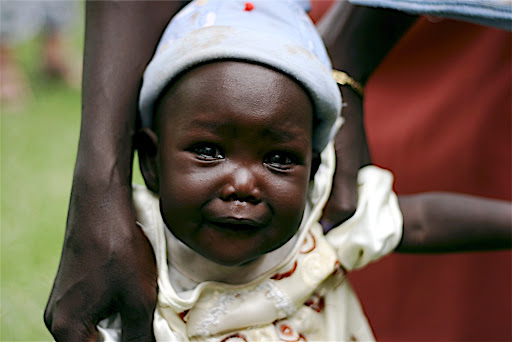
Here at Bingham, Grade 7 has 3 IT classes a week. Grade 8 has 3 IT classes a week. Grade 8 has 5 Social Studies classes a week. These are my core classes. I have other classes of Study Hall and computer lab supervision, and starting in March I will have a 2 hour elective course once a week, but these 3 keep me quite busy for now, as well as the video work I am doing. Each class lasts 40 minutes unless it is a double period (my Social Studies meets back to back two days a week).
Teaching the IT class is right up my alley. Instead of sticking straight to the basics, I began the term with Apple's iPhone keynote presentation. NONE of the kids have even heard of it: they went out of their minds. I have learned that changing the direction of the classes every single day is the only way to keep them from playing Macromedia Flash games and checking their email throughout the class. I am breaking the class down into general computing with an operating system, MS Office, the Net and Photo/Video. We are going to talk alot about Firefox, Apple, shortcuts, Google, Web 2.0, etc. Everything in my power to turn these kids into power-users.
The Social Studies class is somewhat trickier, but equally fascinating. There was not a full fledged syllabus waiting for me, as I anticipated. Thankfully, we are taking a 7 day trip up north in March to see all the historic sites and ruins. I have centered the class around this, and we hope to make it through the history of Ethiopia in 7 weeks. I have attempted to get the kids to focus on the fantastic, mythic lore of Ethiopian culture, but as you can imagine, it sometimes just doesnt do it for 14 year olds. Soon, the kids began towing the line, so I had no choice but to unleash a friendly quiz now and again.
I am learning alot, obviously about Ethiopian studies, but also about engaging these kids and the art of teaching. Just like other teachers have told me, some days are rich, lively, engaging. Other days are the pits. But I have received some interesting feedback in the meantime. Grade 8 nominated me to lead their Chapel, and Grade 7 students have sent me emails saying they like IT class best of their classes (for obvious reasons I'm sure). Overall, teaching Grade 7 & 8 has been exactly what Mr. Doty said it would be: invigorating.
Also, here are some new photos:
Bazaar Slideshow
Utility Update: Thankfully, our water came back on the next morning (Sunday). So we were barely out for 12 hours.
24 February 2007
The Ethiopian Minstrel

I am sitting in a mini taxi and it is full to the floorboards. Friday afternoons are a bad time to cross town. The drivers like to wait until the seats are full and people are sitting on the wheel wells before they shove off to the next stop. A 10 minute drive by Bingham vehicle turns into a 45 minute commute by mini taxi, but it only cost 1.75 EBirr (less than .25 USD). From Bingham its probably only 3 or 4 km across town to my destination, my first music lesson. Riding by mini taxi is like riding in the old days in the Patton's old Suburban: its overcrowded with people of all ages, the seats are faded/patched/springless, the exterior is riddled with dents and perhaps even bullets, some of the windows dont handcrank up and it has its own patent-pending intake system which reroutes the exhaust back into the car. So of course, I am right at home, even though I am sandwiched inbetween two Ethiopians, partially sitting on the lap of the guy to my right.
At the back of the old building's third story, there is a small dark room with instruments strewn about and students tinkering on keyboards or other stringed instruments. The tall man with a doctor's lab coat shakes my hand and introduces himself as Samuel, the owner/teacher. I tell him I want to play the one stringer. He looks at me blankly, obviously confused. So, I gesture to the spike fiddle on the wall. He smiles. He lifts it from the wall and tucks it into his armpit. He draws the bow across the string and in my mind, I am thinking to myself "man, that sounds terrible." Of course, I tell him eagerly I want to learn how to play it. Its hard to know how well he understands English.
At that moment, the power comes back on and I realize now why we had been standing in the dark. The room is now lit up normal and he writes down for me the instrument name: Masinko. A few minutes later and I have my very own 1-stringed instrument tucked in my arm and the body between my legs. Its sound great, just like a 4th grader on a cheap violin missing a quarter of the strings. But I am encouraged, because lessons are 10 EBirr an hour. For less than 1.25 USD an hour, I can learn how to play this beautiful instrument with one string! As I leave with Lesson #1 complete, the power flickers back off.
Thankfully, I didn't have to ride a mini taxi back to Bingham with the Masinko in my lap. But walking down the street with one of these fiddles may have had some locals thinking I was a traveling bard singing the songs of Orpheus as I traverse the globe. As Betsy drove by, I leapt into the Suzuki minivan before anyone asks me to perform, and back to Bingham we bound.
DC
Utility Update: Although we have lost power routinely on Sunday afternoons for approximately 3 hours at a time, we have never lost water until today. As soon as it went out, several teacher/neighbors called us to suggest we fill up every container we have before the tank goes dry. As they said, it could be two hours or two months before it comes back on. We ll let you know the next time we take a shower.
19 February 2007
More Merkato
Turning a corner in the Merkato, a crew of white people cause about every Ethiopian store keeper in sight to simultaneously collect his wares and rush toward you. And by rush, I mean bombard. As we moved about, I stood at a distance and snapped some photos from the hip. If you dare bring the camera up to your face, you are totally ruined. Everyone wants their photo taken, and they all want to see the LCD after you oblige them. I was determined to take some photos of candid market activity, thus I resorted to Rambo style shooting. After just about every shot, I would look at the display and see that my subject's hair was in the frame, and the rest would be roof shed, sky, or some other undesirable distant object. I was glad to be with a group of folks who were actually shopping, anything to create a diversion. We bought a traditional Ethiopian Coffee pot. It cost 15 birr--which is less than 2 USD.
Its quite an odd sensation walking around, being white. At first, it appears that you are a noted celebrity. Then you remember you are simply an outsider, a stranger, an alien--which by default means walking moneybags. But its more than that too. The people are so friendly and warm. It certainly reminds you how nice anonomity is, and why famous folks go mad.
And here is our most recent photo album:
Merkato Slideshow
DC
Merkato
This weekend we explored the Merkato, the largest open air market in Ethiopia. It is only a few kilometers away from our house and is crammed with anything and everything imaginable. It feels like you are crushed into humanity. There is everything from kitchen stuff to produce to dried goods to clothes to to furniture to electronics. People are constantly moving things around, in baskets overhead, on donkeys or in old trucks. You can get lost in the cobblestone-dirt streets that thread between the 'shops.' And everywhere we went, we got yelled at 'you! you! give me ___' or just plain 'Frenege!' or 'Hello-I love you-Give me money!'
Daniel took a lot of photos, so we will upload those soon. (As soon as our African internet cooperates.)
Daniel took a lot of photos, so we will upload those soon. (As soon as our African internet cooperates.)
13 February 2007
The past two days I have spent the morning in language school, and the
afternoons in clinic. Language school is progressing nicely, I can
actually say a few sentences and understand a few things. One of the
most important things to be able to understand here are greetings.
Ethiopians are very big on greetings. They involve lots of words, eye
contact and shaking with your right hand. In fact, they consider it
quite rude if you do not administer a proper greeting. They will tell
others that 'so-and-so is mad at me, they didn't greet me!' If you do
not want to be seen as a rude ferengi, knowing greetings is quite
helpful.
Clinic this week is in Gabriel (last week it was Lideta). We are not
in the midst of tough slums, but we are able to help people of a
different kebele (which is a sub-city). We had a real building next
to a church with bathrooms (instead of the hole in the ground which
was at our clinic in Lideta). Monday was a little slow, but today we
were really busy. I sat with Linda, who is an acute care nurse
practitioner, and we saw patients with the aid of a translator.
Most of the patients were HIV+, single women with children. One woman,
who is HIV+ and has lost her husband, came in for a large abscess on
her leg that was full of puss. She wanted help because she wants to be
very cautious for daughter, who is 4 years old and HIV-. We drained
the puss completely and put her on Bactrium as a prophylactic for
respiratory infection that is common with HIV+ patients. Another
patient was a small HIV+ boy whose mom was also HIV+, but not is other
two siblings. He was so tiny for a 7-year-old and very quiet. He had a
fungal rash on his face and pnuemonia in his lungs. We gave him a
course of amoxocillin and a fungicidal cream for his face. He is on
ARV's and just finished a 6 month course of TB treatment.
It's been great having the full medical team here. It's an
encouragement to treat people who have no access to medical care.
08 February 2007
Whats up Addis!
Here is a brief column by the monthly publication, Whats Up Addis! Its not exactly the Metropolitan Spirit, but its one of the only free publications thats easy to find around town. Enjoy this months' feature with some additional commentary, free of charge.
Markato : Said to be the largest open-air market in Africa, it's a great place to wander around and find anything you can think of. From electronics to spices, clothes to automobile spare-parts... this crowded, bustling and colourful part of town is the place to go! Particularly if you are interested in intimate mixing with the donkeys, goats, and ceaseless traffic.
Blue Taxi : The infamous blue taxis of Addis! This city would not be the same without them. Transporting most of the city's population and giving all the rest heart attacks and ulcers, blue taxis are as much a part of Addis as fish are a part of the sea. Well said.
Beggars : A sad sight around the streets of Addis is the thousands of beggars with no means of support. Hundreds flock to the city in hopes of jobs and a better future, but many of them unfortunately end up on the streets. A great way to help beggars is to hand out meal tickets. Hope Enterprises sells tickets which entitle the holder to a meal. This way someone gets fed and you know the money isn't being misused! Or if you need a packet of tissue for some reason, say after an unlucky visit to a restaurant, you can get them for 1 birr from about every kid on the street.
Religious ceremonies : Ethiopia is a country with a very rich religious heritage. Every year the streets of Addis are home to colourful religious events, the most colourful being Timket in January with processions that are a delight to watch, Meskel in September with a huge Demera at Meskel Square and Ramadan with everyone celebrating together. Come to Africa to escape the incessant sound-systems blasting from SUVs? Thankfully, the religious institutions here pick up the slack by constantly blaring chants, amharic hallelujahs & amens all at top decibel for every neighborhood to hear all hours of the day. Again, free of charge.
Listros : What would life in Addis Ababa be if one did not stop by a friendly and hard-working Listro to polish a pair of shoes? How would one dare to show up at office with shoes dirty with the stubborn Addis Ababa kremt chiqa and bega abuara? How about a friendly chat with these hard working kids as you get your shoes nice and shiny! If folks have shoes at all, they are full leather, and they are all about getting them polished, constantly.
White traditional cloth : Ethiopian women traditionally wear white dresses, while men wear white tunics over riding pants. The ladies' shawl, the natella, usually has a very colourful border on it, which is also found near the bottom edge of the women's dress. However, a wide variety of traditional clothing can be seen in Ethiopia ranging from loin cloths to the latest fashion. Shiro Meda is a great place to shop for these elegant accessories.
Coffee : Coffee is one of the country's strongest symbols. Ethiopia thrives on coffee and likes to drink it too. Once you have tasted Ethiopian coffee, there is no going back - there is nothing else like it! Addis has cafes on every street serving great 'buna'. For those who have time and want to have the real Ethiopian experience, the coffee ceremony is not to be missed--be prepared though, you are in it for three
delicious cups! One would think, considering Addis as father to coffee, that a good cup of joe would be standard issue at Bingham. Wrong. In fact, its weak, tasteless. Some even swear its instant coffee, gasp.
Injera : Teff is the staple grain of Ethiopia. The grain yields a seed much smaller than the size of a wheat grain, but is the basis of Ethiopian traditional. As it turns out, dont serve someone injera until its three days old. If its fresh off the griddle, its an insult to your guests.
Addis Ababa has a great number of restaurants that serve injera and all the tasty wots that go with it. Treat yourself to some wonderful cuisine and most traditional restaurants feature live singing and dancing to keep your eyes and ears happy as well as your taste buds! Never fear, your gastrointestinal will be fine. All the restaurants here are clean, safe, sanitary, and gladly welcome all ferengi patrons.
See more at www.whatsupaddis.com
DC
07 February 2007
Today I spent the morning in Amharic class. We have around 13
students, including two other MTW interns -- Derek & Jim. I am
learning lots of things, like colors, numbers, prepositions, etc...
But the coolest thing is that we are learning the Amharic alphabet,
which FYI has over 300 letters. It sounds and LOOKS scary, but we
learn it in seven different forms, so we eat the elephant bite by
bite.
This afternoon I spent in the clinic with the medical team from
Baltimore. In a building (the term building should not be confused
with any establishment in the Western world; it's more like a really
old enclosed pavilion with corrugated tin/eucalyptus/cement walls,
shaped like a warehouse) we had triage, doctors meeting with patients,
a pharmacy, and a lab. I worked in the lab, running tests for
chlamydia and gonorrhea and learning how to mount slides for TB tests.
And did I mention that this clinic has been set up in the roughest
slum of Addis? It's the type of slum you smell before you see it.
Sewage and trash everywhere. Kids playing barefoot in the street.
People staring at me and Derek as we walk in with lab supplies (maybe
it was combination of ferengi and bottles of reagents).
Yesterday I spent the afternoon with a medical team doing home visits
in Lideta. We treated four different families, all beneficiaries of
the HIV project. It was amazing. We went into these homes with Alemu,
the social worker/ translator, and administered health care.
These 'homes' are probably a lot less than the shed where you keep
your lawnmower. Yet, their owners have them tidied up, music playing
and seats for their guests. We were treated with the utmost
hospitality.
This week I have finally been hit with the realization that I am in
Africa being a part of a project that helps the sick. I am working,
and it feels good.
Betsy
06 February 2007
Scott. Taylor. Carey.

You may be tempted to think these three names merely refer to the famous missionaries of the same namesake. Well, here at Bingham, they are actually distinctions in a fierce rivalry between the three houses competing in Field Day, a two day event. Although there is no Quidditch tournament, the kids take the track events quite seriously.

Each house has a separate corner of the field where they gather and scream/chant their team name endlessly and without any real purpose other than that the other house is doing it. Like most sporting events, its either inspiring or sheer insanity. I roamed for two straight days, and nabbed a bunch of photos and some solid footage. The kids enthusiasm was staggering. Even the kids who could not jump rope to save their lives were ecstatic simply to compete.

One of the last events on Saturday was a long distance relay, and one of the students with cerebral palsy took the baton second in the lineup. He walks around with arm/leg braces but as he had told me earlier, "I wouldn't stay out here if I wasn't going to race." As he struggled past me, I fought away a crushing sensation: the determinism in his eyes was undiluted, raw, intense. For the race, he had put down his arm crutches. As the other teams lapped him, most of the kids in the infield jogged/walked beside him. I dont think anyone even noticed when the other team won the race. When he crossed the line, the place went up in a roar. I am glad to be at Bingham.
DC
You may be tempted to think these three names merely refer to the famous missionaries of the same namesake. Well, here at Bingham, they are actually distinctions in a fierce rivalry between the three houses competing in Field Day, a two day event. Although there is no Quidditch tournament, the kids take the track events quite seriously.

Each house has a separate corner of the field where they gather and scream/chant their team name endlessly and without any real purpose other than that the other house is doing it. Like most sporting events, its either inspiring or sheer insanity. I roamed for two straight days, and nabbed a bunch of photos and some solid footage. The kids enthusiasm was staggering. Even the kids who could not jump rope to save their lives were ecstatic simply to compete.
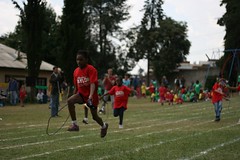
One of the last events on Saturday was a long distance relay, and one of the students with cerebral palsy took the baton second in the lineup. He walks around with arm/leg braces but as he had told me earlier, "I wouldn't stay out here if I wasn't going to race." As he struggled past me, I fought away a crushing sensation: the determinism in his eyes was undiluted, raw, intense. For the race, he had put down his arm crutches. As the other teams lapped him, most of the kids in the infield jogged/walked beside him. I dont think anyone even noticed when the other team won the race. When he crossed the line, the place went up in a roar. I am glad to be at Bingham.
DC
31 January 2007

The full welcome
By the time we reached the Yeshi Buni after church last Sunday, we were famished, and fairly excited, since this was the supposedly most respected place in town to get Injera. We washed our hands, drank sparkling water from a sealed bottle, and heartily enjoyed our meal with our fingers, with Ethiopians from church.
Sunday afternoon was completely over by the time we got home. It was after 4PM and I thought that I was going to be late for the soccer game. I wasnt. It was close to 5 before all the Ethiopians were ready to play. They all laughed that I had brought 'boots' from America and my team cheered "We get the Whitey." Sadly, I didnt play long before we had to leave to have dinner and prayer with the Warren's and the New City team. But it was in my best interest. The difference in altitude is noticeable, or else I am really out of shape. The night ran long, but time at the Warrens is rich. We really enjoyed the New City Team as well.
With a full day teaching ahead, my nerves woke me up Monday--I didnt think twice about my stomach griping. By the time my last class was over, I rushed back to our apartment and Betsy had the same look in her eyes:
"Welcome to Africa. You are now part of the African Legacy."
It had started out gradual, but it was all downhill from there.
Neither of us slept Monday night. We greeted each other with the grimacing nod at regular intervals. It wasnt just gastro-intestinal; it was a fever, too.
Thankfully, I have a light class load on Tuesday, and as the bell rang ending my one class for the day, I was the first out the door. I didn't wave on the way out.
By Wednesday, we were up and wandering about. I made it through all of my classes. Its such a standard occurrence around here that there's not much sympathy to go around. Its not of matter of if, its a matter of when. Its probably the same reason that they call Pepto Bismal an 'after dinner mint.'
By Friday, the fever finally departed. Still some residual side effects, but our initiation ceremony is more or less complete, so we think. I was just glad to have made it to all my classes but the ills were still plaguing us. Sunday after church one week later, of all places, we went with the new MTW team from Baltimore and NYC back for, none other, more injera. By this sunday night we decided to quit acting tough and take the Cipro. Within hours, the disease was gone. We slept like never before, until 5AM when the Mosque next door starting blaring the loudspeaker of Amharic chanting. Bets crawled out of bed and stumbled to find leftover airplane earplugs for the both of us, and as I put them into my ears, I never had so much love in my heart before--so much so that I fell back asleep almost instantly.
PS The internet has been almost completely nonexistent. We blog at its mercy. More anon.
28 January 2007
This has been our first weekend in Addis. It has been quite busy, but every day we are getting more and more settled.
Friday night we ate at the Bryan's house. Dawn Bryan is the Recruitment director at Bingham; she and her husband Steve have been living in Addis for 14 years. Steve works at a graduate school (which has a seminary) for Ethiopians. She's from Denver and he's from Oklahoma City. They have three boys. Dinner at their house was a fun and rambunctious night. The boys are 10, 9 & 7 and a lot of fun. After the boys headed for bed, we had some good conversation. We learned a lot about them and life in Ethiopia.
Saturday morning we took it pretty easy, doing laundry (which FYI takes 10 times as long in Africa than in the US), making breakfast and trying to clean up (cleaning here takes 50 times as long!). Daniel worked some on his classroom prep, and I made my first high-altitude lunch failure. We both ate it, but there was way too much water in the rice and it totally overcooked -- so our 'chicken and rice' dish looked more like overcooked chicken and rice soup. Of course, there was not enough chicken and the rice had turned mushy; the tomatoes I added ended up turning the dish an alarming shade of PINK. At any rate, the Pakistani directions on our basmati rice are plainly not for 7600 feet.
Saturday evening, Erin & Jared Miller took us out to dinner at a place called 'Family Restaurant.' They had many things on the menu -- Nachos, Falafel Burger, Veal Souvlaki, Sweet & Sour Pork, Bacon Cheeseburgers, etc... Basically all genres of cooking that ferengis might order (ferengi is Amharic for foreigner). It was cheap and pretty good, but it was fun to get to hang out with the Millers. They are close in age to Daniel & I, and we got a lot of the low-down on Bingham. The Millers are from southern Ohio and very Midwestern (their son Trussell is named after the 2004 OSU football coach). Jared is the Bingham Athletic Director. Erin grew up partially as a missionary kid, so she has lived in Ethiopia during the Dergue (communist regime) and France and Western Africa. She moved back to Ohio as a 7th grader and her father is now a pharmaceutical director. Quite an interesting couple. Needless to say, they are adventurous and know a lot about Addis, even though they have only been here since August.
After dinner the Millers' took us to Shoa (a ferengi supermarket -- the term supermarket is used loosely), where we bought clean tupperware (the stuff furnished in our apartment as been here for too many decades) and large coffee mugs with Amharic letters on them.
Sunday morning we got up and had breakfast, but had to be ready at 945 to go with a couple of girls who invited us to church. We had to get there a bit early so that Erica could practice singing with the worship group. Remember what I said about everything in Africa taking a lot longer than it does in the US? Well, the service didn't even start until 1115, and it lasted a solid two hours. Then there was plenty of hanging around and chatting afterwards. We didn't head to lunch until almost 2 PM. Beza, the church we attended, was more like an Ethiopian evangelical service (aka, fairly charasmatic and long) in English. It was very international, with just as many Ethiopians as westerners. It was great to get a chance to go and see how Ethiopians worship. Everyone was very welcoming, and the girls who took us (who are probably older than me -- why am I calling them girls?), who are teachers at Bingham, are friends with lots of Ethiopians and speak very good Amharic. In fact, they took us and a couple of Ethiopians out to a traditional Ethiopian restaurant after church. Our table had the only white people in the building. But the injera (Ethiopian crepelike-pancakes made of teff) was delicious, and we had beef tibs, botswa shiro, and tomatens (tomato, jalapeno, vingar salad) all heaped on injera. We sat on stools and ate off low injera-tables. Our table of 6 ate for 18 US dollars. It was delicious.
Tomorrow, I am starting language school in the city. I will be studying Amharic every morning for a month. It really is crucial for me to be able to speak some Amharic so I can relate to the beneficiaries of the project. Daniel starts school tomorrow with Grade 8 Social Studies. In fact, he is at the teacher's lounge right now, working on his lesson. Do be thinking of him tomorrow, as he descends into his first week of teaching middle-schoolers.
PS: We never found high-speed internet this past weekend; whenever we get something besides shared dial-up, we will upload pictures.
27 January 2007
Thursday, being our third full day in country, was our first go to see the AIDS project. Jacqui was to meet us at 8AM and take us across town to the Lideta area. Immediately out of the Bingham gate, Jacqui zips through a flock of school kids all matching in colorful uniforms with the same look on their face: another day of school. I am starting to get the hang of riding in the car. It doesn't matter if its a small child, a body sleeping by the street, a donkey or a SUV truck, 6 inches is plenty of space to navigate around them and maintain full speed. Driving to Lideta, we pass the Merkato which is the huge open air market. To no one's surprise it is jam packed, and to be honest, doesnt look much different from the rest of the city.
Once we arrive at the compound, we meet the various Ethiopian staff and make our way upstairs to the main offices. The three offices are littered with Macs. The first thing through the door is an iMac and Airport Extreme. Towards the back is a slew of Mac Minis and then, a couple of Dell PCs cowering in the corner. Downstairs, a team from Chattanooga's New City Church are working construction. They are renovating the back courtyard to accommodate future interns. This involved moving the outdoor toilet, or 'squatty potties' around to the rear of the yard and turning a small shed into living quarters with a kitchen.
Finally, Alemu, (the spelling is mine, all mine) greeted us and asked us to come along with him as he makes visits to nearby beneficiaries. As we walk, I am surprised we are not bombarded by the local folks. I was worried that walking next to Blondie was going to cause a groundswell. The first individual we visit is bedridden. Alemu asks him questions to see if he has been taking his medicine. His cough is long and deep. Alemu thinks he has TB. His daughter works at the little stove and the room is barely larger than an average bathroom. The smell is the same. As we walk out of the door, Alemu explains that the wife is positive as well but they are waiting to test the three daughters. They dont want to know.
The next beneficiary we visit is an ex-prostitute. Her house is the same size but very clean and orderly. She appears healthy, vibrant. She is very friendly and shows us pictures of her son and her as a young girl. Her eyes sparkle.
The third patient we see is elderly and has just returned from the Black Lion Hospital. Her legs are swollen and Alemu admits that he is depressed by her situation. Her children do laundry while they are there and they smile as we leave--its rude not to greet people as you pass them. Finally, we come to our last visit for the morning. A beautiful girl who most be 5 or 6 runs up to us and after Alemu play-kicks with her, we enter her home. Its obvious that she lives with her grandmother and Alemu explains that the little girl is not a beneficiary but they help her with her medication because the grandmother has a difficult time cutting the pills into halves and the little girl does not like to swallow the pills. Her parents died of AIDS 4 years ago. We play with the girl some more and Alemu tells us that she is actually almost 10 years old and when her parents were ill, she was never enrolled in school; since she can't read/write, she can't go to primary school and she is too old to be admitted to kindergarten. At this point, her only option is to practice her letters and numbers in a homemade, newspaper-bound notebook.
After lunch, we return to Bingham and sleep, for two hours.
24 January 2007
Well, we have just finished up our second day in Addis. Here are a few highlights:
We went to the embassy bright and early to register and start the process of obtain Ethiopian drivers' licenses. It took us half an hour to go less than 10 km in the morning rush hour traffic. Now in AA, rush hour does not mean bumper-to-bumper cars -- it means throngs of people walking in the middle of the road, donkeys loaded up with wood and packs, and masses of sheep being herding along by their owner. And in the mix are a lot of old cars and trucks -- minibus taxis (like minivans painted with soccer stars on the back), old private taxis, and personal cars and vans. Oh, and everyone is always beeping their horn, at all humans, vehicles and animals.
Getting things done at the US embassy was just like any sort of bureaucratically line-waiting scenario. Following signs, showing passports, filling out forms. Then I realized I didn't have my US driver's license; Daniel had a manila envelope with all of our important documents in it, but he assumed I had my license on me. Whoops! So, then we had to go back to our driver Kassahoun and another guy who was helping us (forget his name), and explain that we needed to go back to Bingham basically because Betsy was dumb and forgot to get the one document that was the most important.
One hour of AA driving later, we arrived back at the embassy, swore our statements of driver's license legality, and we off to the Ministry of Foreign Affairs. There we handed off documents, took a number, and waited for our turn in line. Actually, it felt a lot like the US DMV, where you go in knowing you will be sitting patiently on a hard bench to fork out your money to people are just trying to move you along. The interesting thing is that we sat outside under a corrugated metal pavillon, as the Foreign Affairs people had windows that reminded me of a fast food drive-thru window. Oh, and there was also a TV outside playing CNN news which was covering bits from Bush's State of the Union Address. After we bumbled through the lines and had our papers soundly stamped, we were back off to Bingham.
After a light lunch, I met with Jacqui to 'go for a shop' in Addis. She is doing all the cooking for the 7th grade retreat this weekend, so she took me to several different groceries. First we went to a place that a lot of locals go to called 7/11. It is run by a muslim man and has the best fresh fruit and vegetables. I learned a couple of things:
1. The grocery workers don't want you touching their produce; you tell them what you want, they pick it off the shelf, give it to you to inspect, then they weigh it and they place it in your trolley (cart).
2. The grocery clerk handed Jacqui and I macchiatos (strong ethiopian coffee and milk) as we shopped; it was quite nice, but makes shopping difficult as you carry around your demi-tasse and saucer.
3. Never hand something to an Ethiopian with your left hand. It is considered rude; I kept forgetting this as I struggled to fish Ethiopian Birr out of my zipped up purse.
Jacqui took me to a meat shop, another grocery which caters more to ex-pats, and a cafe called Chocolata. At Chocolata women who have come off the streets are given a job making pastries and nacho chips (sorta like tostitos) and homemade salsa (which they freeze in weird jugs). It is a really cool place to support since you are helping people to have jobs who would ordinarily have nothing.
It took quite a while to get all the shopping done, but I got home just as Daniel was getting out of another meeting. Then I spent time bleaching vegetables and rinsing them before we had dinner at a neighbor's house. Tomorrow we will be our first day at the HIV project.
Thank you everyone for all your thoughts and prayers.
If you have any interest in sending anything to us, our address is:
Daniel & Betsy Collins
Bingham Academy
P O Box 4937
Addis Ababa, Ethiopia
Hope everyone is doing well!
23 January 2007
Hello Everyone! We have just finished up our first 24 hours in the lovely city of Addis Ababa (AA).
Last night, we arrived in Bole Airport just before 9PM. Our flight from Geneva to AA was quite pleasant. We connected in Frankfurt with no problems. We also had a stop in Khartoum (Sudan) which we were unaware of until we boarded the plane. In Khartoum some people got off, and they refueled the plane. So we sat in the plane on the tarmac for over an hour. Looking outside the teensy plane window, Khartoum seemed dry, hot & orange. Very much a hot desert.
Hence, landing in AA was nice and cool. The skies were dark and there was a light breeze. Andy & Bev Warren picked us up from the airport. We got all of our bags safe and sound and through customs without a second look. We were pleasantly surprised, considering all the computer & video hardware we had in our bags. The Warrens' greeted us warmly, and we piled into their SUV and drove to Bingham Academy (where we now live).
From the airport to Bingham, you roughly cover the east-west direction of AA. The streets were in good shape, and relatively empty. The Warrens' gave us a verbal tour of the different roundabouts and sub-cities we went through.
When we arrived at Bingham, Murray Overton, the director, had waited up for us to greet us and show us to our apartment. Murray is from New Zealand, with a wonderfully dry and slightly inappropriate sense of humor. His jokes are often sarcastic and hilarious. He showed to our apartment, which had been stocked with bread, milk, eggs, fruit, jam & kola nuts (a peanut/barley snack mix).
Our apartment is large and airy with lots of windows. It is actually a converted dorm, so we have two bedrooms and one bathroom which has two shower stalls and a large bath tub. We have a nice sitting room and a large kitchen with a fridge, gas range, etc... Everything was nice and organized and clean enough considering its an old building. It has a lot of character. It sort of feels like souped-up summer camp. We got all of our things unpacked, explored a little and were in bed by midnight.
We woke up to a sunny morning and took it a bit easy. I made eggs and toast for breakfast, and we poked around our apartment, taking in the sites and sounds of morning. We got showered and dressed, and headed out to the school office for some orientation with Murray. Murray gave us a tour, introduced us to a bunch of folks and went over the necessities. Then we had morning tea with all the faculty. We had coffee, tea, and fresh cinnamon rolls, as the kids run wild during a 20 minute recess. Everyone was so welcoming and friendly. In fact, we have people either taking us out to dinner or having them over at their house for the next 5 days!
After morning tea, we went for some more information-session with Murray. Then we strolled around some more, had lunch in our apartment and continued to settle in. In the afternoon, we went to the office to meet with Dawn Bryan (the recruiting coordinator -- she is quite wild and extremely friendly). Then Daniel met with Murray and had his first staff meeting. I went back to the apartment to try to figure out the internet situation and get us a bit more settled.
We just got back from having dinner at the Warrens' with Andy, Bev & Kit (their 10th grade son at Bingham). It was very interesting to drive through the city more during rush hour. The Warrens' live in the sub-city Lideta, which is a really poor area of the city. So, as we were driving to their house we passed many slums and open window shops. It seems that everyone here lives behind a gate -- even if you live in a shack of corrugated metal, there is some fashion of a gate. And the thing you don't expect, is that total slums are located right next to giant mansions (which also have large gates). And people and chicken and children are within spitting distance to the Chinese ambassador's large, gated mansion. You also see a lot of open window stalls where people are selling everything from shampoo to fruit to DVDs to hot coffee to cigarettes. And these are in rows right next to the slums and everything else. It makes you think -- if people are living in corrugated metal shacks, who is buying DVDs?
Dinner was delicious and it was great to sit with them and talk about their project and HIV work in Ethiopia. We talked some about the different teams that do different things here and some of what I might be doing. Bev prepared dinner that was delicious -- fruit and sauteed vegetables and a good meat stew with green peppers on rice. The food here is so fresh.
The only drawback is that you have to bleach every piece of produce and then rinse it with 'clean water.' Clean water is not tap water. Clean water is what has been treated to kill all the bacteria -- we have a tank behind the school kitchen that we refill these big plastic jugs. That is also the water you brush your teeth and shave with.
The weather here is so mild and sunny. There are lots of eucalyptus trees, so it smells good. I haven't really noticed the change in altitude, but I probably will when I attempt to go for a run tomorrow. Bingham has a track that runs around the compound -- right alongside the compound wall (which is topped with barbed-wire). It is almost a kilometer long.
Tomorrow Daniel & I are going to go the US embassy to get registered, and to foreign affairs (in case Somalia attacks Ethiopia and the try to get all the Americans out), and to start the process of getting Ethiopian drivers' licenses. Apparently it's easier to get an Ethiopian license if you are American -- but you still have to pay over 100US and it takes two days. So, by Friday we will be able to drive legally in AA. Hopefully.
I am also going grocery shopping with Jacqui (Murray's wife) tomorrow afternoon. Then Thursday morning Daniel & I are both going to the AIDS project. Mainly to get acquainted with everyone and talk about specifics. I am looking forward to that!
OK, it's approaching 11PM right now ... so I need to go get ready for bed. We have to leave at 8AM for our errands. Sleep well everyone!
XOXOXO
Betsy
Subscribe to:
Posts (Atom)
